


- Messages
- 5,147
- Reaction score
- 2,188
- Points
- 113
The Conjugate Method has become one of the most respected and widely adopted strength-training systems for athletes who want to have maximum strength and power. Originally developed within the walls of Westside Barbell, this training system prioritizes multiple facets of athletic performance in a carefully structured, non-linear fashion.
The conjugate method follows three fundamental methods: maximal effort, dynamic effort, and repetition effort. Both promote strength and power.
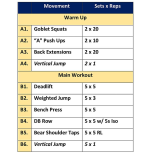
The dynamic effort method also increases speed, agility, and explosiveness - important attributes in most sports. Diverse accessory work and balanced programming reduce injury risk and ensure long-term athletic development without setbacks.
The non-linear nature of conjugate periodization facilitates recovery and adaptation and allows athletes to train year-round without overtraining or stagnation.
Exercise choice must follow the athlete's sport. For example, an explosive posterior chain exercise for a sprinter might be grip-intensive for a wrestler. Managing fatigue involves sleep, nutrition, and active recovery.
Progress tracking is critical. The program must be tested regularly with maximal lifts, speed metrics, and accessory work to remain effective. Adjustments must be made for progress and changing athletic demands.
Another is choosing exercises that are unrelated to sports goals. Accessory movements must be performance-relevant and must not be copies of powerlifting templates.
Ignoring mobility and flexibility can also be a problem. Even though the Conjugate Method stresses strength and power, mobility training helps avoid injury and maintain movement efficiency.
Lastly, not tracking progress slows long-term development. Without consistently measuring strength gains, speed improvements, and overall performance during training, athletes risk stagnation and inefficiency.
While originally designed for powerlifters, the Conjugate Method is adaptable to virtually any sport, including football, wrestling, rugby, track and field, and even combat sports. Its focus on strength, speed, and power makes it highly transferable.
Is the Conjugate Method suitable for beginners?
The method is better suited for intermediate to advanced athletes with a solid foundation in strength training. Beginners may benefit more from simpler linear programs before progressing to conjugate periodization.
Can the Conjugate Method improve conditioning?
While not primarily designed for conditioning, the repetition effort method and sport-specific accessory work can improve muscular endurance and work capacity. However, dedicated conditioning sessions may still be necessary.
What Is the Conjugate Method?
The Conjugate Method evolved from Louie Simmons's Westside Barbell philosophy. Impressed by Soviet and Eastern Bloc periodization models, Simmons tried to translate these to Western athletes. The fundamental idea behind conjugate periodization is to rotate different exercises and training focuses so athletes can work on multiple strength qualities at once.The conjugate method follows three fundamental methods: maximal effort, dynamic effort, and repetition effort. Both promote strength and power.
Key Components of the Conjugate Method
Maximal Effort Method: Building Absolute Strength
The maximal effort method is the foundation for absolute strength development. Athletes do heavy lifts at or near their one-repetition maximum (1RM) for one to three repetitions. This method recruits higher threshold motor units, thereby increasing maximal force production. Regular rotation of primary lifts avoids neural and muscular fatigue and maintains progressive strength gains without stagnation.Dynamic Effort Method: Developing Speed and Explosiveness
The dynamic effort method targets the ability to produce force rapidly. Athletes use lighter loads—generally 50-70% of their 1RM—and focus on moving the barbell as explosively as possible. This approach enhances the rate of force development (RFD), a crucial quality for speed and power in sports. It bridges strength and speed, ensuring athletes not only develop raw power but can apply it in dynamic movements.Repetition Effort Method: Improving Muscular Endurance and Hypertrophy
The repetition effort method addresses muscle endurance and hypertrophy in addition to the other two. The athlete performs several repetitions at moderate loads to produce metabolic stress and muscle growth. This method supports injury prevention by strengthening and stabilizing muscles and correcting muscular imbalances—an essential component of long-term athletic progress.Accessory Exercises for Sport-Specific Improvements
Accessory exercises adapted to the sports involved are important to the conjugate method. These movements target weaknesses and improve joint integrity and athleticism. They also fine-tune the performance and durability of unilateral leg work for field athletes or core stabilization for rotational sports.Benefits for Athletes
The Conjugate Method offers many advantages to athletes wanting to improve their sports performance workouts. The main benefit is increased strength output due to consistent training in all relevant physical qualities. Athletes become stronger and more explosive, which directly translates to better performance on the field or the court.The dynamic effort method also increases speed, agility, and explosiveness - important attributes in most sports. Diverse accessory work and balanced programming reduce injury risk and ensure long-term athletic development without setbacks.
The non-linear nature of conjugate periodization facilitates recovery and adaptation and allows athletes to train year-round without overtraining or stagnation.
Implementing the Conjugate Method for Athletic Performance
The athletes should structure their weekly training around key sessions to apply the Conjugate Method. Typically, this involves two maximal effort days and two dynamic effort days—one for each upper and lower body. Accessory and repetition effort work is incorporated to meet individual needs and reinforce sport-specific characteristics.Exercise choice must follow the athlete's sport. For example, an explosive posterior chain exercise for a sprinter might be grip-intensive for a wrestler. Managing fatigue involves sleep, nutrition, and active recovery.
Progress tracking is critical. The program must be tested regularly with maximal lifts, speed metrics, and accessory work to remain effective. Adjustments must be made for progress and changing athletic demands.
Common Mistakes and How to Avoid Them
Poor recovery management leads to overtraining during Conjugate Method training. The athletes must understand that maximal and dynamic effort sessions need rest and recovery.Another is choosing exercises that are unrelated to sports goals. Accessory movements must be performance-relevant and must not be copies of powerlifting templates.
Ignoring mobility and flexibility can also be a problem. Even though the Conjugate Method stresses strength and power, mobility training helps avoid injury and maintain movement efficiency.
Lastly, not tracking progress slows long-term development. Without consistently measuring strength gains, speed improvements, and overall performance during training, athletes risk stagnation and inefficiency.
Frequently Asked Questions
What sports benefit the most from the Conjugate Method?While originally designed for powerlifters, the Conjugate Method is adaptable to virtually any sport, including football, wrestling, rugby, track and field, and even combat sports. Its focus on strength, speed, and power makes it highly transferable.
Is the Conjugate Method suitable for beginners?
The method is better suited for intermediate to advanced athletes with a solid foundation in strength training. Beginners may benefit more from simpler linear programs before progressing to conjugate periodization.
Can the Conjugate Method improve conditioning?
While not primarily designed for conditioning, the repetition effort method and sport-specific accessory work can improve muscular endurance and work capacity. However, dedicated conditioning sessions may still be necessary.